No products in the cart.




Microdosing Psilocybin: A Beginner’s Guide to Small-Dose Mushroom Experiences
In recent years, microdosing psilocybin has become a widely discussed topic in conversations about wellness, productivity, and mental clarity. While traditional psychedelic experiences involve noticeable perceptual changes, microdosing refers to consuming very small amounts of psilocybin mushrooms that are typically below the threshold of strong psychedelic effects.
Interest in microdosing has grown as researchers, entrepreneurs, and individuals explore how small doses of psychedelic compounds may influence mood, creativity, and cognitive flexibility. Although research is still ongoing, the topic continues to attract attention in both scientific and public discussions.
This guide explores what microdosing is, why people are interested in it, and how beginners approach the concept.
What Is Microdosing?
Microdosing refers to consuming a very small quantity of a substance, typically around one-tenth of a standard psychedelic dose. The goal of microdosing is not to experience strong psychedelic effects, but rather to explore subtle changes in mood, focus, or perception.
With psilocybin mushrooms, microdoses are often described as amounts small enough that the individual can continue their normal daily activities without significant impairment.
Because microdosing involves such small quantities, the experience is generally described as subtle rather than dramatic.
Why People Explore Microdosing
Interest in microdosing has expanded rapidly over the past decade. Many individuals who discuss microdosing report curiosity about how small doses of psychedelic compounds may influence their mental state or daily routines.
Some commonly discussed motivations include:
- exploring changes in creativity
- improving focus and productivity
- enhancing emotional awareness
- encouraging reflective thinking
It is important to note that much of the current discussion around microdosing comes from personal reports and early research, and scientific studies are still developing.
How Psilocybin Interacts with the Brain
Psilocybin is converted in the body into psilocin, a compound that interacts with serotonin receptors in the brain. Serotonin plays a role in regulating mood, cognition, and perception.
Some research suggests that psilocybin may temporarily influence how different regions of the brain communicate with one another. Scientists studying psychedelics are particularly interested in how these compounds may affect neuroplasticity, which refers to the brain’s ability to form new connections and adapt to new experiences.
If you’re interested in the science behind this process, you can also read our article on psilocybin and neuroplasticity.
What a Microdose Experience Feels Like
Because microdosing involves very small quantities, the experience is typically much more subtle than a full psychedelic experience.
People who discuss microdosing often describe effects such as:
- slightly elevated mood
- improved mental clarity
- enhanced creativity or curiosity
- increased awareness of surroundings
Unlike traditional psychedelic experiences, microdosing generally does not involve strong visual or perceptual changes.
However, experiences can vary widely between individuals, and not everyone reports noticeable effects.
Microdosing Schedules
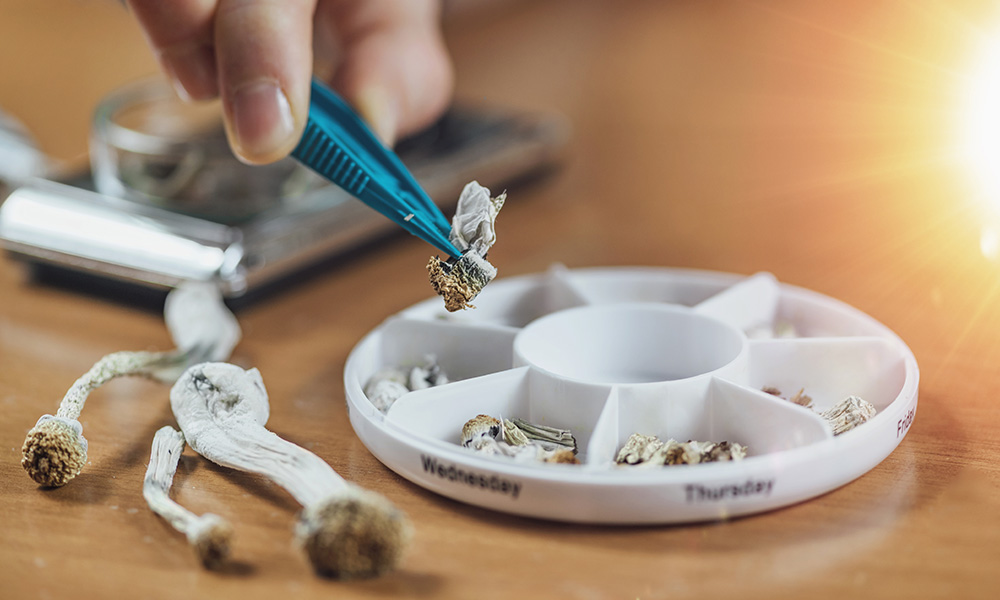
People interested in microdosing often follow structured schedules to track their experiences. While different approaches exist, one commonly discussed pattern is taking a microdose followed by several days without dosing.
This spacing allows individuals to observe how they feel on dosing days compared to non-dosing days.
Common schedules discussed in microdosing communities include:
- dosing once every three days
- dosing twice per week
- alternating dosing and rest days
These approaches are often used to observe how subtle changes may occur over time.
Product Formats Often Used for Microdosing
Because microdosing involves small and precise quantities, certain product formats may be easier to work with than others.
Two commonly used formats include:
Mushroom Capsules
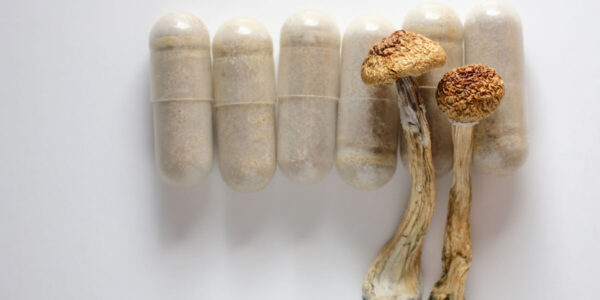
Capsules are often preferred because they provide consistent portion sizes. Since the mushrooms are powdered and placed into capsules, it becomes easier to track how much is being consumed.
Powdered Mushrooms
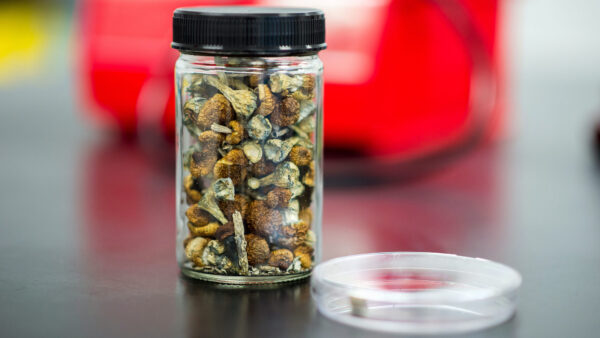
Some individuals grind dried mushrooms into powder so that they can measure small quantities more accurately.
Capsules tend to be the most convenient option because they eliminate the need for measuring and also remove the earthy flavor of dried mushrooms.
If you want to explore the differences between these formats, you may also find our guide on mushroom capsules vs dried mushrooms helpful.
Research and Ongoing Scientific Studies
Microdosing has attracted the attention of researchers studying psychedelic compounds. Some early studies have examined how small doses of psychedelics may influence mood, creativity, and cognitive performance.
However, scientists emphasize that more research is needed to fully understand how microdosing affects the brain and behavior over time.
As interest in psychedelic research continues to grow, universities and medical institutions are conducting new studies to better understand these compounds.
The Growing Conversation Around Psilocybin
Psilocybin mushrooms have been used historically in various cultural contexts, and modern research is continuing to explore their potential psychological and neurological effects.
In recent years, discussions around psychedelics have shifted toward scientific investigation, with researchers examining how these compounds may influence mental health, perception, and brain function.
Educational resources and ongoing research help provide a better understanding of how psilocybin interacts with the human brain.
Final Thoughts
Microdosing psilocybin has become a widely discussed topic as curiosity around psychedelic compounds continues to grow. While the concept involves consuming very small amounts of psilocybin mushrooms, experiences and outcomes can vary widely between individuals.
As scientific research expands, our understanding of how psychedelics influence the brain continues to evolve. Learning about microdosing from educational sources can help people better understand the topic and the broader conversation surrounding psychedelic research.